
Context
Why Generalized AI Falls Short
The smartest AI models in the world know nothing about you. Every conversation starts fresh — or altered by opaque memory systems. They function as generic PhD-level assistants, but without understanding who you are, they miss the nuance that makes advice actually land.
Wingman started from a personal realization: AI as a therapist, coach, friend, psychologist, and ideation tool is extraordinarily powerful — but only when it understands your emotional patterns, communication style, and thinking tendencies. Not from a transcript history, but from a structured psychological profile that evolves with you.
The thesis: emotional intelligence tracking fundamentally changes the quality of AI interaction. A model that sees your unique EQ score — understanding core metrics of how you think, feel, and communicate — can tailor responses in ways that feel genuinely personal.
What Wingman Replaces
Generic ChatGPT conversations with no user context
Therapy apps that feel impersonal and scripted
Journaling apps with no intelligent feedback
Multiple AI subscriptions for different use cases
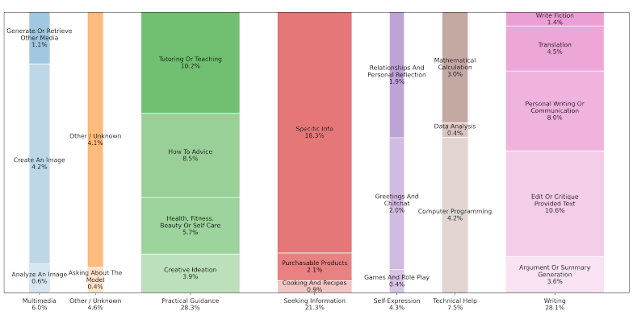
Research basis: 68% of ChatGPT usage falls under practical guidance — exactly the use cases where personalized EQ context transforms the interaction quality.
Wingman signal: personalized EQ context helps the model respond with more empathy, precision, and emotional fit.
Core Innovation
The 13-Metric EQ Framework
Condensed from multiple open-source emotional intelligence frameworks based on openpsychometrics.org, the system measures 13 psychological dimensions on a -1.0 to +1.0 scale with a baseline of 0.
Scores fluctuate through daily check-in questions (Likert-scale) with calibrated weights based on psychometric foundations. Each question shifts specific metrics, fine-tuning the profile as users engage over time.
On chat initialization, the full EQ profile loads into the system prompt alongside personalization settings (name, age, sex, personality type). The model — trained to interpret these metrics as user-specific emotional context — adjusts its communication style, depth, and approach accordingly.
Sample EQ radar — 13 axes, each metric represented as a point on the -1 to +1 range. Profile shape shifts with each daily check-in.
COMM_DIRECTNESS
How directly vs. indirectly you communicate
COMM_EMPATHY
Tendency to lead with emotional understanding
EMO_INTENSITY
How strongly emotions are experienced
EMO_REGULATION
Ability to manage emotional responses
REASSURANCE_NEED
Need for external validation
COMM_DETAIL_LEVEL
Preference for detail vs. big picture
THINKING_SYSTEMATIC
Structured vs. intuitive reasoning
CONFLICT_AVOIDANCE
Tendency to avoid or engage conflict
CONFLICT_DIRECTNESS
How directly conflicts are addressed
THINKING_ABSTRACTION
Concrete vs. abstract thinking preference
THINKING_VALUE_ORIENTATION
Logic-driven vs. values-driven decisions
SOCIAL_ENERGY
Energy from social interaction
CONFLICT_COLLABORATION
Preference for collaborative resolution
Approach
Technical Decisions
Native iOS via SwiftUI
Built native for the personal experience of having it on iPhone — and for the exclusivity that comes with Apple's ecosystem. When presented as a marketing final video in class, it drew visible reactions. Early development used Xcode's beta ChatGPT integration, but Cursor and Claude Code quickly proved more capable for the heavy lifting.
OpenRouter for LLM Access
OpenRouter provides a single API endpoint for switching between models as the landscape evolves. Current model: Kimi K2.5 — selected for scoring highest on emotional intelligence benchmarks while remaining in the top 10 for general intelligence. Previously used Kimi K2 (before image support) and GPT 5.2 for multimodal.
Cloud over Local LLMs
Local model testing worked for prototyping but cloud services were the clear path for a public iOS release. The product is fundamentally a prompt service — the token cost scales with usage, and cloud deployment ensures consistent quality across all users without device-dependent performance issues.
Daily check-in (Likert 1–5)
Wingman's daily check-in presents short Likert-scale questions (1–5) that map to the 13 EQ metrics. Each answer is weighted so scores shift in a psychometrically grounded way — the profile refines over time instead of resetting every chat. That signal pairs with the mood rating (also 1–5) so the model gets both stable traits and how you're feeling today before new threads start.
Architecture
System Overview
iOS App
SwiftUI
OpenRouter
API Gateway
Kimi K2.5
LLM Provider
Daily Check-in
Likert Questions
EQ Engine
13-Metric Calc
System Prompt
Profile Injection
Key Details
Deep Dives
01Prompt Engineering as Product Design
The system prompt is the product. Different EQ profiles produce meaningfully different AI responses — not just in tone, but in the depth, structure, and type of support offered.
This bridges design thinking and technical implementation: the “UI” of an AI product isn't only screens — it's the prompt architecture that shapes every interaction.
Web search is intentionally off. Real-time news and Generative Engine Optimization (GEO) can skew answers; keeping the model in a closed context keeps responses steadier and more aligned with your profile.
02Onboarding & Daily Check-in UX
Users open to a greeting, a 1–5 mood rating, and the Wingman button above the EQ radar. After mood, a daily insight appears; from there they can chat, browse history, or open settings.
The bar is low friction: a few taps to log state, immediate value from the insight, and an obvious path into conversation. Optional settings carry profile, name, birthday (age for the model), and other personalization.
03Building AI Products Solo
The development journey went through Xcode's beta AI features, then to Cursor and Claude Code working side by side. Python knowledge from AP Computer Science Principles (scored a 5) provided the foundation — SwiftUI was learned through the process of building, with AI tools handling the complexity gaps.
The approach: function as your own agency. AI-assisted development unlocks the ability to build native apps, handle backend infrastructure, design UX, and iterate rapidly — all as a solo developer. Block coding concepts from high school translated directly into understanding how to architect and delegate to AI coding tools.
Primary stack for AI-assisted development: Cursor in the IDE, Claude for research and Claude Code alongside builds.
Demo
Commercial Video
Outcome
Results & Reflection
The positive reinforcement from the EQ-calibrated responses is tangible — conversations feel personal, insights feel earned, and the daily check-in creates a rhythm of self-reflection that generic AI completely lacks. The best mental health tool for a 23-year-old new grad navigating an economic landscape of layoffs and uncertainty.
Development continues alongside other projects. The journey from Wingman into AI-assisted development broadly — working within Cursor, Claude, Claude Code — has shaped a design philosophy focused on where the human creative touch makes the real difference.
New update coming May 2026.
Download on the
App Store
Honest Reflection
Wingman was built with the ambition to be a breakout product. A business was formed around it, pitch competitions were entered, investors were approached. It didn't blow up — partly due to inexperience with fundraising pitches, discomfort with public speaking to crowds, and the challenge of marketing a deeply personal tool.
But the journey itself was the product: networking, failing at pitches, being surprised by the people met along the way. The app brought curiosity, joy, and discovery. It's not everything — but it's still the first place to go when stuck in your own head.
A life full of love, confidence, happiness, and strength — that's the pitch. Built for anyone who finds AI models genuinely smart and wants to unlock the best AI companion for anything in life.
Stack